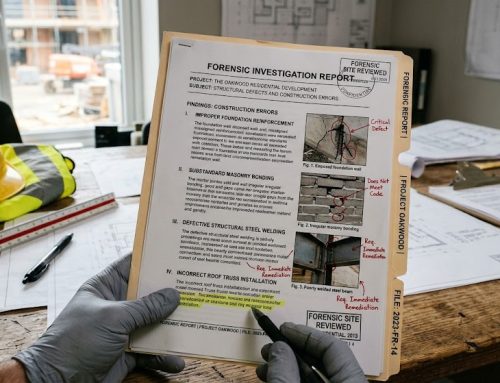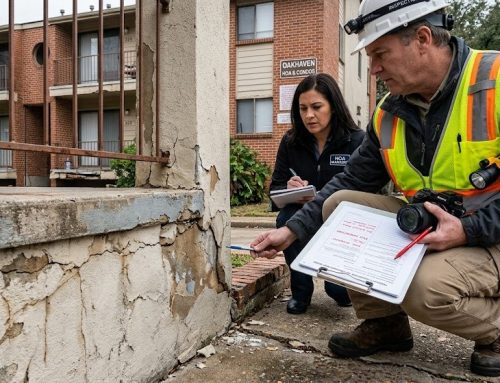
Concrete and masonry are designed to provide lasting performance, but even durable building materials can develop problems over time. When cracking, spalling, moisture intrusion, or other signs of distress appear, the visible damage is only part of the story. Understanding what happened—and why—requires looking beyond the surface. A careful failure analysis can reveal essential information about how a building has performed and help guide decisions about repairs, maintenance, and future improvements.
What Causes Concrete and Masonry Failures?
Concrete and masonry failures can develop for many reasons. Some problems originate during design or construction, while others develop because of environmental exposure or changes to the building over time.
Moisture is often a key factor. Water can enter through cracks, joints, or other vulnerable areas and contribute to deterioration. In reinforced concrete, moisture can also contribute to corrosion of embedded steel, which may eventually cause cracking or spalling. The American Concrete Institute identifies corrosion, freeze-thaw damage, chemical exposure, and other deterioration mechanisms among the factors that can affect concrete performance.
“The visible damage does not always tell you where the problem started. A crack may be the result of an underlying condition that developed much earlier, which is why identifying the cause is such an important part of a forensic investigation,” says Matthew Furlong, Owner of Först Consulting Group.
Looking Beyond the Visible Damage
A successful concrete or masonry failure investigation begins with a detailed assessment of the affected area. Investigators may document cracking patterns, displacement, staining, spalling, moisture-related damage, and other conditions. The location and characteristics of the distress can provide clues about how the failure developed.
Masonry walls, for example, can experience water penetration when materials, wall design, or workmanship do not perform as intended. These factors are important considerations when evaluating water penetration and leakage through masonry.
“Patterns matter. The location, direction, and extent of cracking can help establish whether you are looking at an isolated defect or evidence of a broader building performance issue,” Furlong says.
Related post: Analyzing Concrete and Masonry Failures
Testing Can Help Establish the Cause
Visual observations are an important starting point, but additional testing may be necessary when the cause is not immediately apparent. Depending on the circumstances, an investigation may include material sampling, moisture assessment, laboratory analysis, or testing of concrete masonry units. ASTM C140/C140M, for example, provides testing procedures for characteristics such as compressive strength, absorption, density, and moisture content of concrete masonry units.
“Testing should answer a question rather than simply produce more information. The goal is to connect the test results with what is happening in the building so the evidence can support a clear understanding of the failure,” Furlong says.
Why Proper Failure Analysis Matters
Determining the cause of concrete and masonry failure can help property owners avoid repairs that address only the symptoms. A repair may temporarily conceal cracking or moisture damage without correcting the condition that caused it. A forensic investigation instead focuses on establishing what went wrong and what evidence supports that determination.
“When you understand the mechanism behind a failure, you can make better-informed decisions about how to address it. That can be especially important when significant repair costs or liability questions are involved,” Furlong says.
Först Consulting Group as Your Advocate and Forensic Investigator
Först Consulting Group approaches building problems from an investigative perspective. Rather than simply documenting visible damage, our firm works to understand the conditions that contributed to the failure and develop a defensible picture of what occurred. This can help property owners, attorneys, insurers, and other stakeholders better understand complex building issues.
As an advocate for our clients, Först Consulting Group provides objective forensic investigation and technical insight when concrete and masonry problems require a closer look. Whether a property owner is facing an unexplained failure or needs an independent assessment of an existing condition, we can help uncover the evidence behind the problem and provide a clear path toward informed decision-making.
Contact us today.